About Harriet
Holistic Feeding, Sleep + Early Parenting Support on the Central Coast and Online
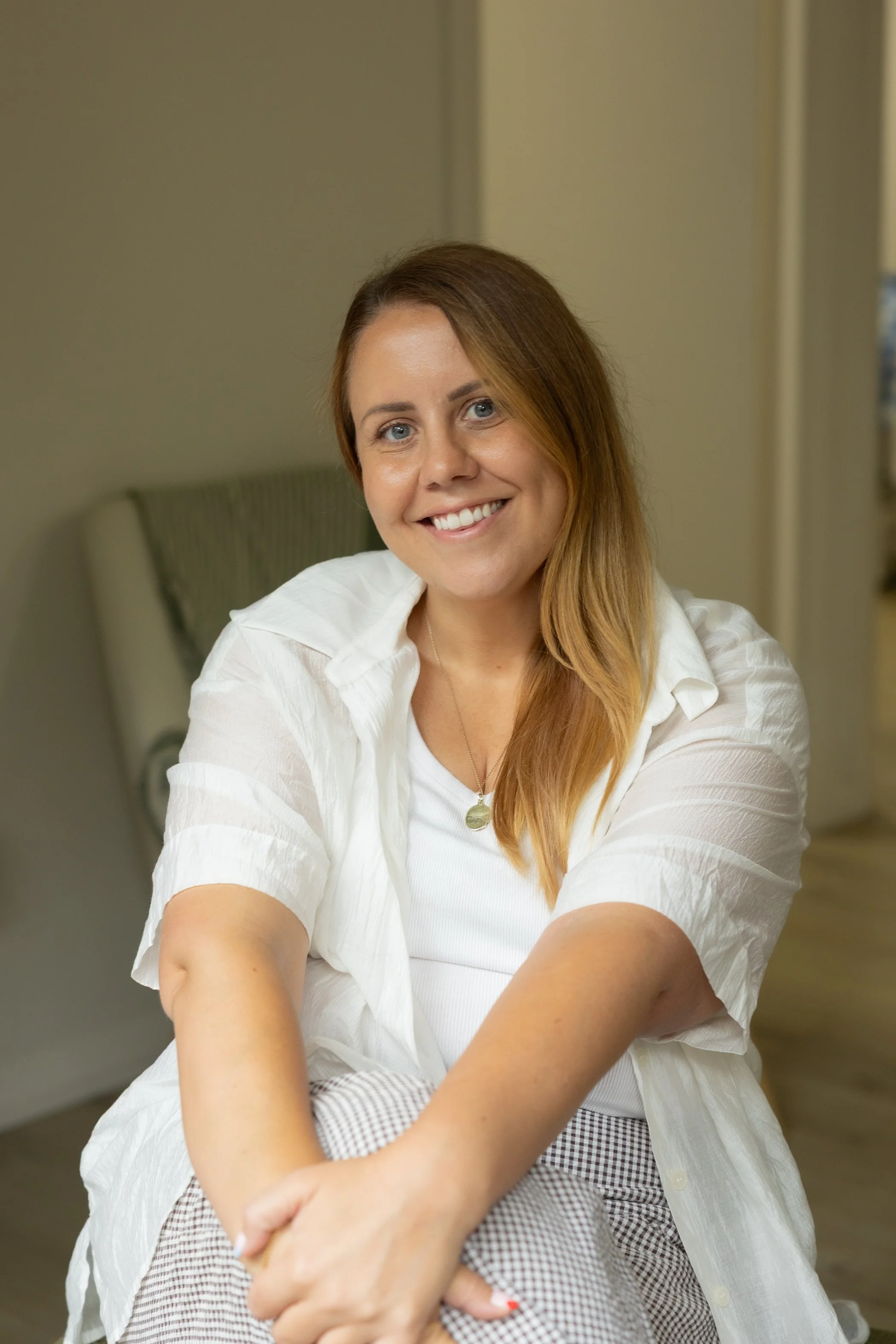
Hello, I’m Harriet.
I’m a registered midwife, International Board Certified Lactation Consultant (IBCLC), and child and family health nurse, based on the Central Coast and supporting families both in person and online.
I live locally with my husband and our three boys.
I’ve worked in midwifery since 2009, across public and private hospitals, community health services, and home-visiting settings, supporting families through pregnancy, birth, feeding challenges, infant sleep concerns and early parenting transitions.
I’m the founder of The Breast Help, a practice created to offer calm, practical and respectful support for feeding, sleep and early parenthood.
Alongside my private practice, I also:
Occasionally support local Privately Practicing Home-birthing Midwives as a second/support Midwife.
Co-founded The Village Collective, a multidisciplinary family support and practitioner hub on the Central Coast
Work with Mini+Me (Krumbled Foods) as their in-house clinical expert across pregnancy, feeding and early parenthood education
Support families at Helix Dentistry, a local tongue-tie clinic, working as a midwife and IBCLC
My work is grounded in gentle, respectful, evidence-informed care, without guilt, pressure or perfection.
Why I do this work…
-
Becoming a mother myself changed how I practise in ways I never expected.
In 2016, I welcomed my first baby. By that time, I was already an experienced midwife, yet I found myself struggling with aspects of breastfeeding that went far beyond weight gain.
My son gained well. On paper, everything looked “fine”.
In reality, I was feeding from one breast only. I had ongoing nipple damage. I developed mastitis repeatedly. I had a significant oversupply, yet no plan or guidance to help regulate it in a way that might make feeding more comfortable for either of us.
My baby was unsettled, uncomfortable, and slept very little. He cried often. Feeding was hard work for both of us. I could sense something deeper was going on, but I didn’t yet have the language or training to describe it.
He also could not take a bottle. At the time, this was framed as him being “fussy”, “manipulating me” and simply “refusing”. Now I understand it was not unwillingness, but genuine difficulty for him.
This added another layer of pressure.
Breastfeeding felt like the only option, and it had to work, because there was no backup.
We later learned he had oral restrictions that affected how he fed, but at the time, this wasn’t recognised or explored.
Instead, the messages I received were familiar ones:
That his weight was good.
That some babies were just “colicky”.
That mastitis was something to endure.
That oversupply was “lucky”.
That I simply needed to persist.
I would arrive worried and leave being told everything was normal, without anyone being able to explain what my baby was experiencing or why feeding felt so hard.
Over time, that began to feel like being quietly gaslit. Not intentionally, but through a system that normalised what it did not know how to assess or support.
I didn’t feel proactive in helping my baby feel more comfortable.
I didn’t feel empowered with knowledge.
I felt like I was constantly reacting, managing symptoms, and doubting my instincts.
As both a mother and a clinician, that was incredibly hard to sit with.
-
Eventually, I stopped reaching out for support.
Each time I asked for help, I left feeling more confused and less certain of myself. So I powered on, waiting for the magical day things would become easier.
They didn’t.
His sleep became more fragmented. We became more exhausted.
When we finally sought sleep support again, we were sold something described as “gentle sleep”. In reality, it was sleep training.
It was rigid. Prescriptive. It ignored feeding, temperament, and what my baby was communicating. And it went against everything my instincts were telling me.
But we were desperate.
So we tried to follow the plan.
We watched the clock. We stretched windows. We tried to force sleep when our baby wasn’t ready. We lived inside rules that didn’t fit our family.
We slept less.
Our home felt tense.
Our baby was distressed and angry.
We were wary of anyone offering “gentle” sleep support.
Eventually, we stopped.
We swung to the opposite extreme and did nothing, enduring long nights and broken sleep, believing this was simply the cost of motherhood.
Now, with the knowledge I carry today, I can see there was another path.
Not sleep training.
Not suffering in silence.
But informed, responsive support that could have protected breastfeeding, supported regulation, and helped our whole family sleep better over time.
I have been where you are.
Tired.
Second-guessing yourself.
Trying everything.
Being told conflicting things.
Wondering why it feels so much harder than it “should”.
-
Later, when my boys were older and I had the space to study deeply, I immersed myself in holistic, developmentally informed approaches to infant sleep and became accredited in Neuroprotective Developmental Care.
I continued expanding my training in lactation, oral function, mastitis care, low milk supply, tongue-tie support that goes beyond releasing, cranial nerve assessment, craniosacral therapy foundations, and laser safety.
I also had the privilege of learning from IBCLC mentor Felicity Hughes, whose depth of knowledge, thoughtful approach and respect for maternal instincts helped me put language to what I had lived myself.
She showed me how to support families holistically, how to think beyond rigid frameworks, and how to hold space for both clinical understanding and parental intuition.
Now, I practise in the space between rigid programs and being left alone to cope.
Not quick fixes.
Not pressure.
Not perfection.
But thoughtful, responsive, biology-based support that respects both babies and parents.
-
My goal is to offer the kind of care I needed as a new mother:
calm
non-judgemental
respectful
practical
grounded in evidence
and deeply human
Support that adds tools to your parenting toolkit, rather than taking your confidence away.
As my understanding of babies, biology and breastfeeding continues to grow, so does my love for this work.
The more I study lactation and early development, the more in awe I am of what the human body, and the parent–baby relationship, are capable of.
It is a privilege to walk alongside families during such a vulnerable and transformative time in their lives.
If you’re here, you’re welcome.
Harriet x
Credentials
2011
Bachelor of Midwifery
2018
Graduate Certificate Child + Family Health
2022
Motherhood Matters Pathway 3 Mentorship Program for IBCLC Exam
95 Hours Advanced Lactation Specific Education for IBCLC Exam
Focused Clinical Breastfeeding Support: Masterclasses in Neuroprotective Developmental Care (May 2022)
Advanced clinical skills for the management of cry-fuss, sleep and mood problems: Masterclasses in Neuroprotective Developmental Care (June 2022)
NDC Accreditation pathway completed in 2022 to provide safe, evidence based support to families for issues ranging from sleep, breastfeeding, cry/fuss problems and family mental health. Possums Charity has since dissolved and no longer provides accreditation for NDC (2023)
Birth Trauma Training for Birth Workers - by Dr Erin Bowe
2023
Craniosacral Therapy (CST1) - The Upledger Institute
Cranial Nerve Assessment for Infant Feeding
International Board Certified Lactation Consultant Certificate
2024
Laser Safety Officer certificate - LLLT
Medication use and breastfeeding: From principles to practice
Plugged Ducts & Mastitis: A Holistic Approach to Care
Myo Munchee BEBE Certified Practitioner
2025
Tongue Tie Institute Foundation Course
Low Milk Supply Course
2026
Hazelbaker Institute: Anatomy of Infant Suck
Hazelbaker Institute: Using the Assessment Tool for Lingual Frenulum Function™©