

You put your baby to bed, they sleep for a stretch, and then they are wide awake at 2am for an hour or more. This pattern is often called a split night, and it is more common than most parents are told.
What may be going on
Sleep is driven by two things working together. Sleep pressure is the need for sleep that builds the longer baby is awake. The body clock tells baby's body when it is day and night. In young babies the body clock is still maturing, and sleep cycles are shorter and lighter than ours. A long awake stretch overnight usually means that sleep pressure, the body clock or comfort is out of step for now.
Common contributors
Sleep pressure. A long or late last nap can leave baby less ready for a long stretch of sleep.
Hunger or feeding patterns. Some babies take less in the day and make up for it overnight, especially in a developmental stretch.
The sleep space. Light, temperature and noise all affect how easily baby links sleep cycles.
Development. New skills like rolling, crawling or standing often show up as more night waking.
Discomfort. A blocked nose, ear infection or teething can disrupt sleep.
What you can try first
Keep a simple log for a week and look for when the long awake stretch happens. Then change one thing at a time, such as moving the last nap a little earlier, offering calm undistracted feeds in the day, or spending a few minutes in baby's sleep space at night to notice the light, noise and temperature for yourself.
If baby seems unwell, in pain, or you are worried, speak to your GP or child and family health nurse.
Go deeper
My guide Baby Sleep Troubleshooting walks you through split nights, early rising and bedtime false starts, with a printable sleep log. If you would rather talk it through, you can book a 45-minute phone consult.
General information only. It does not replace individual medical advice.
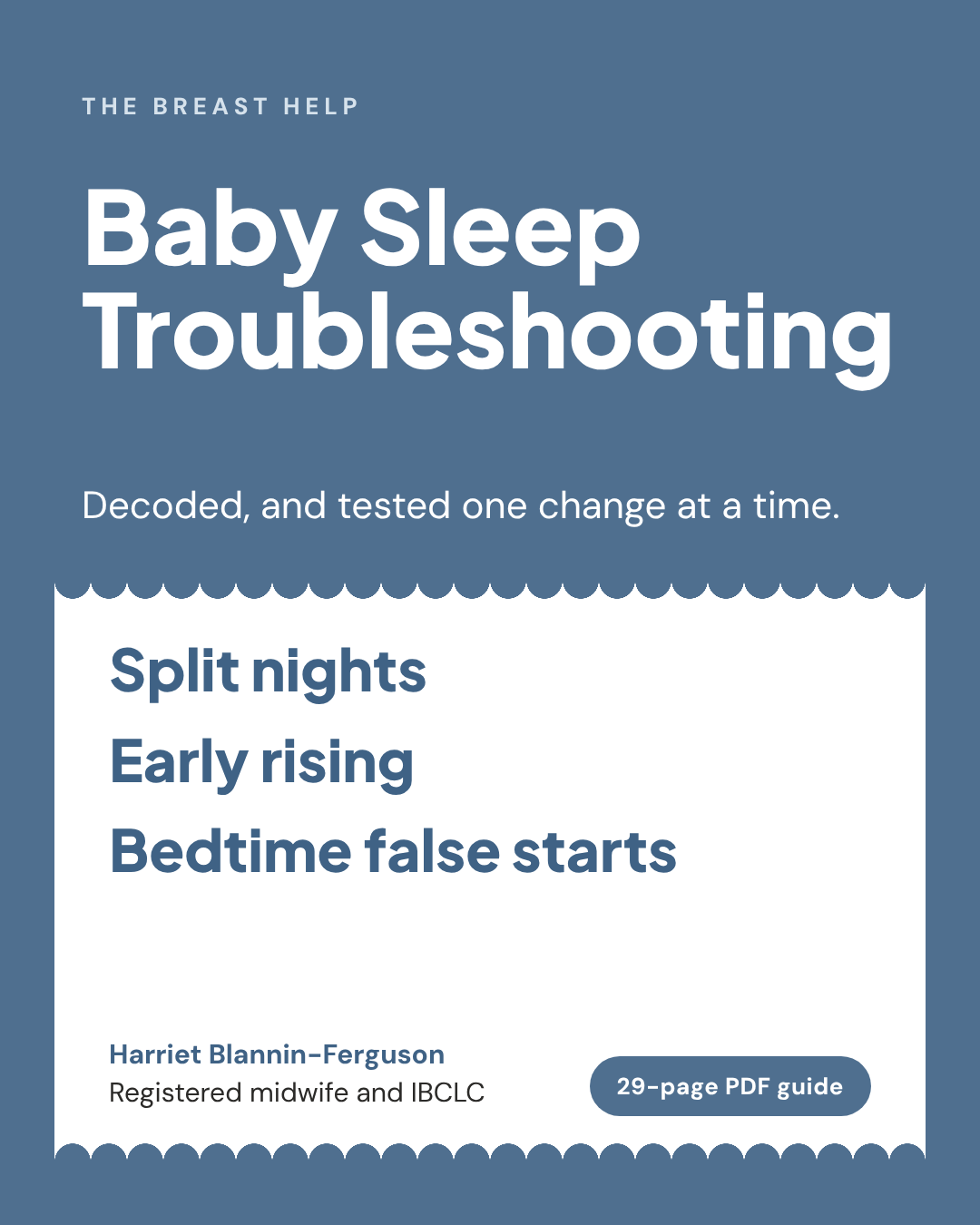
A 29-page PDF guide to decoding split nights, early rising and bedtime false starts, tested one change at a time. By Harriet, a registered midwife and IBCLC.