

How to Find Your Optimal Flange Size: A Step by Step Guide Using the FITS™ Method
If you're pumping with the flanges that came in your pump box, there is a very high chance they are not the optimal size for you. The flanges that ship as standard with most pumps are 24mm and 28mm, and the older clinical recommendation was that anything pulled into a tunnel that big counted as a "fit." Newer evidence has moved on. We now know that fit that big is almost always too large, and it is one of the most common reasons women experience pain, low output, and slow supply decline while pumping.
The good news is that finding your optimal flange is one of the most fixable parts of your pumping journey. This blog walks you through it step by step using The Flange FITS™ Guide developed by Jeanette Mesite Frem, MHS, IBCLC, RLC, CCE (Babies in Common), the framework most lactation professionals are now using to assess flange fit in a comfort, efficiency, and milk yield based way.
What the FITS™ Method Actually Is
FITS™ stands for:
F: Feel of the flange (size, shape, material)
I: Intensity of the pump (vacuum pressure and pull)
T: Tempo of the pump (cycle speed, rhythm, and vibration)
S: Supply of milk (drips, dribbles, or strong sprays)
The framework guides you through finding the flange size, shape and material that feels best AND gets the most milk out, paired with the pump intensity and tempo that supports your supply through clear, regular sprays of milk.
Step One: Measure the Tip of Your Nipple
The flange that fits closest to the actual size of your nipple often feels best and gets the most milk out. Start by measuring the width of the tip of each nipple (left can be different to right, and that is normal).
To measure:
1. Gently touch or tug the nipple to help it stand out a little.
2. Use a tool with millimetres or centimetres. Place 0 at one edge of the nipple tip.
3. The tool does not need to touch the nipple.
4. Note the measurement in mm.
5. Repeat on the other side. Sizes are often different.
This is what your free downloadable nipple tip ruler is designed for!
Step Two: Test Three Flange Sizes (F = Feel)
The FITS™ guide recommends testing three hard plastic flange sizes side by side:
One that is a little smaller than your nipple tip.
One that is about the same size as your nipple tip.
One that is a little larger than your nipple tip.
Turn the pump on at a low vacuum level and pump briefly with each size, comparing how each one feels and how the milk flows.
What you are looking for in each:
Best fit (optimal): The sides of the nipple gently touch the sides of the flange tunnel, and the nipple glides a little back and forth. It feels comfortable, and milk comes out easily.
Too small: The nipple does not move easily in the tunnel. Less milk (or no milk) comes out.
Too large: It may hurt, the nipple swells and gets larger than usual, the areola can pull into the tunnel and swell, and less milk comes out. (This is what the older "fill the tunnel" advice was suggesting was correct, but newer clinical evidence shows this is too big.)
A thin layer of coconut oil or nipple balm on the bend of the flange can increase comfort while you test sizes.
Step Three: Set Your Intensity (I)
Once you have your size, the next part of FITS™ is intensity, the pump's vacuum pressure or pull strength.
The right intensity is the lowest level at which milk is still spraying and you are completely comfortable. Once milk is spraying well, stay there. You can gradually increase the vacuum across a session if it remains comfortable AND you can see more sprays as a result. If increasing intensity does not increase your sprays, it is not helping.
Pumping should feel good from start to finish. It should not be something to "tolerate." Your nipple should feel comfortable when the session ends and should be approximately the same width as before pumping (it may be a little longer, but not visibly wider or swollen).
Step Four: Find Your Tempo (T)
Tempo is the pump's cycle speed and rhythm, not just speed alone. Some pumps offer simple cycles, others offer more variation. Think of it like music. Some tempos are fast, some slow, some a mix of both, and some pumps lean more toward a vibration than a pull and release.
A common starting pattern from the FITS™ guide:
Start on the fastest tempo. After milk has been flowing for 20 to 30 seconds, switch to a slower tempo. You should see more sprays.
If sprays stop or slow during the session, switch back to a faster tempo for 1 to 2 minutes, then back to slower again.
Some women stay on a fast tempo for the entire session. Others get more milk on slower cycles. Play with it. The "right" tempo is the one that produces the most consistent milk flow with comfort. Aim for a 15 to 20 minute session.
Step Five: Watch Your Supply (S)
The S in FITS™ is supply, but specifically what you are looking for during a pumping session. The goal is to see sprays of milk for most of the session. Drips and dribbles are fine for parts of it, but sprays are the gold standard.
Helpful supply notes from the FITS™ guide:
Best flange fit often means more milk in a shorter session, not less.
Hands on pumping during the session and hand expression after the session can significantly increase output.
Left and right breasts often differ in supply.
Morning sessions usually yield more milk.
If your overall supply is low and you have your size, intensity and tempo dialled in, that's a sign you need individualised support, not more time on the pump.
What About Silicone Flanges and Inserts?
The FITS™ guide is clear on this. If you are aiming for maximum comfort AND maximum milk yield, find your optimal hard plastic flange size first. Once you know what size works, you can then trial silicone flanges or inserts and compare. Many women find that an optimally sized hard flange actually gets more milk out than a silicone alternative, and is completely comfortable.
That said, silicone has its place, particularly for sensitive tissue, flat or inverted nipples, vasospasm, or when hard plastic friction is the main issue. The key is to know your size first, so you are comparing like for like.
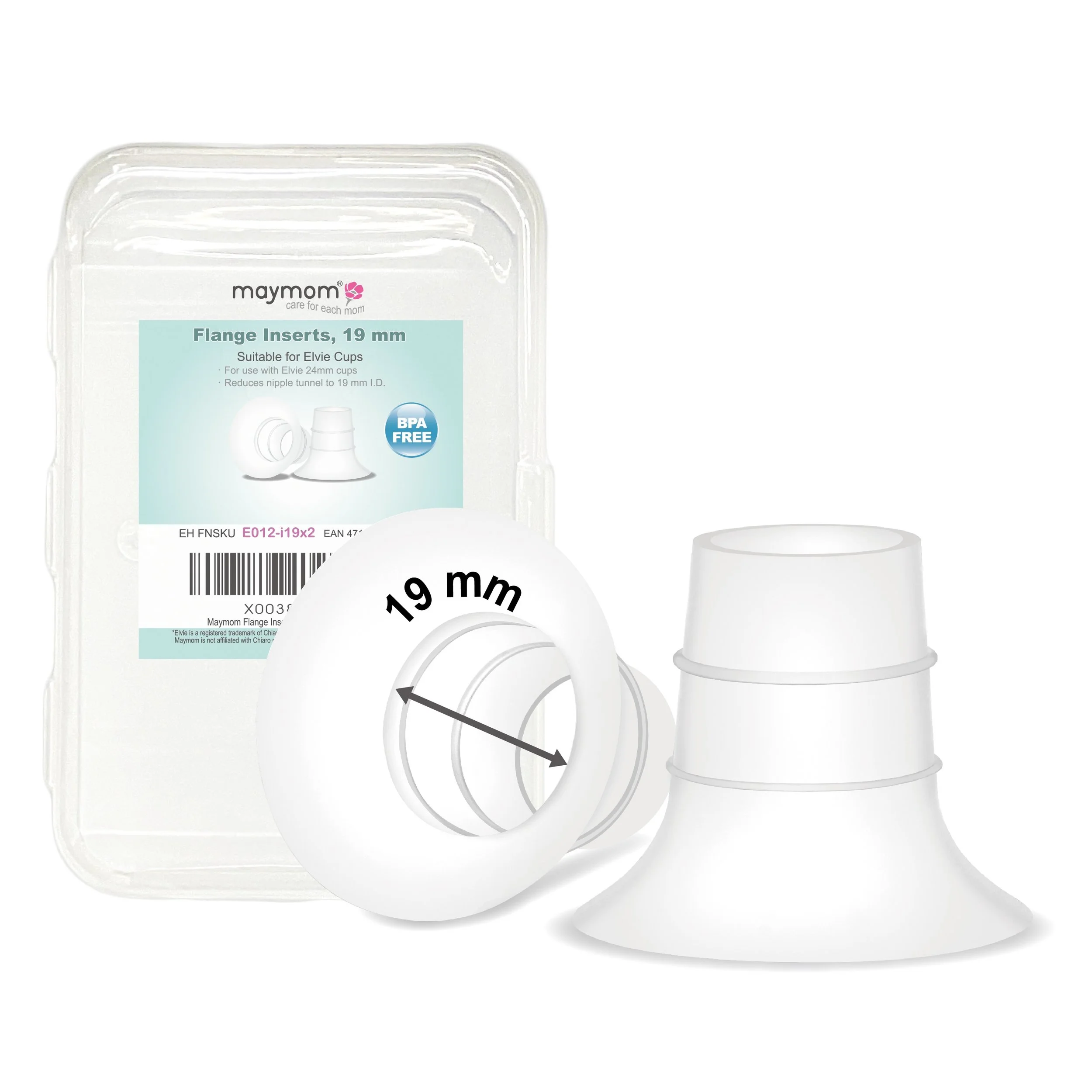
Sizes 13mm to 20mm – Pack of 2 with Storage Case
Maymom’s Long Plus Flange Inserts are designed to make your pumping experience more comfortable and efficient by reducing the size of your existing 24mm shield or flange.
Available in sizes 13mm - 20mm, each pack includes 2 inserts and a clear hinged storage case to keep them clean and ready to use.
Common Sizing Mistakes
A few things I see often in clinic that are worth flagging:
Eyeballing the size. "She looked at me and said you're a 28." This is not a measurement, it's a guess.
Measuring the wrong part of the nipple. The FITS™ guide measures the nipple tip, not the base.
Assuming both sides are the same. They are very often not.
Trying to "fill" the tunnel. A bigger flange does not equal more milk, and the older recommendations that suggested it does have been superseded.
Tolerating pain. Pumping should not hurt. Pain is information, not part of the process.
Not retesting. What fits at 4 weeks may not fit at 12 weeks. Tissue softens, nipples often become smaller and more pliable as supply regulates.
Different Breast and Nipple Shapes
Some specific considerations:
Flat or inverted nipples often benefit from a slightly different flange angle or silicone inserts that allow the nipple to draw out without trauma. Find your hard flange size first, then trial alternatives.
Asymmetric breasts very commonly need different sizes on each side.
Larger or pendulous breasts may benefit from angled flanges or pumping while leaning slightly forward to keep the flange properly seated.
Elastic nipple tissue can elongate significantly during pumping, which can mimic the look of a too small flange. Lower vacuum intensity is usually a better lever than sizing up.
If standard sizing isn't working for you, please reach out for a one to one session. Anatomy is not one size fits all.
Free Downloadable Nipple Tip Ruler
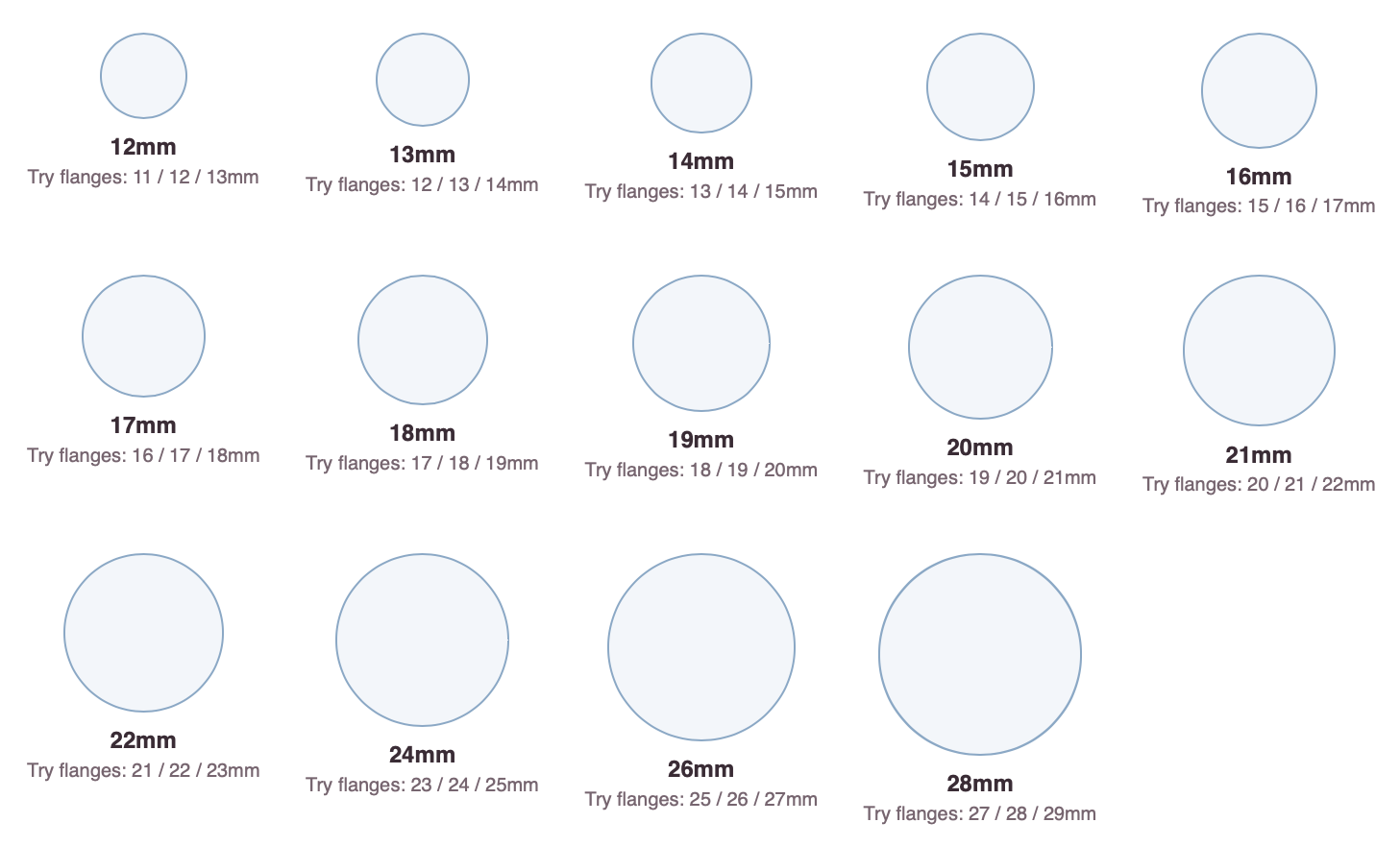
To make Step One easier, I've made a free printable nipple tip ruler you can use at home.
Print on A4 at 100% scale (do not select "Fit to page"), and confirm with the 50mm verification bar at the top of the page before measuring.
My Recommended Flange and Sizing Products
Once you know your size, the right tools make all the difference. Here is the range available in The Breast Help shop, hand selected for different breast and nipple shapes.
Silicone Nipple Ruler. A reusable, soft silicone ruler with cut out circles for accurate sizing in seconds. Great for ongoing reassessment.
Plastic Flanges for Spectra. Hard plastic flanges in a full size range, ideal for finding your optimal fit per the FITS™ guide.
Plastic Flanges for Medela. Same range, designed for Medela pump fittings.
Flange Inserts. Once you know your hard plastic size, inserts are a simple way to convert a 24mm or 28mm flange down to your size if you'd like a softer feel against the tunnel.
Soft Silicone Flanges. Once you've found your hard flange size, these are a useful comparison option for sensitive tissue, flat or inverted nipples, or vasospasm.
Angled Flanges. Designed for larger or pendulous breasts and women who pump leaning back, helping milk flow with gravity instead of against it.
When to Get Professional Support
If you've tried sizing at home and you're still in pain, your output is dropping, or you're stuck in a cycle of blocked ducts, recurrent mastitis, vasospasm, or low supply that doesn't respond to flange changes, please book a one to one session.
Sometimes sizing is the answer. Sometimes the issue is something else (oral function, pump settings, schedule, hormonal factors), and a proper assessment is worth its weight in gold compared to months of trial and error.
You deserve to pump comfortably, efficiently, and without dread. The right flange, paired with the right intensity and tempo, is what stands between you and that experience. 🤍
This blog references The Flange FITS™ Guide by Jeanette Mesite Frem, MHS, IBCLC, RLC, CCE (Babies in Common, 2023). Reproduction and distribution permitted with attribution. The FITS™ framework belongs to Babies in Common. Information is educational and not a substitute for individualised lactation care.
Source: babiesincommon.com